The band, in brief
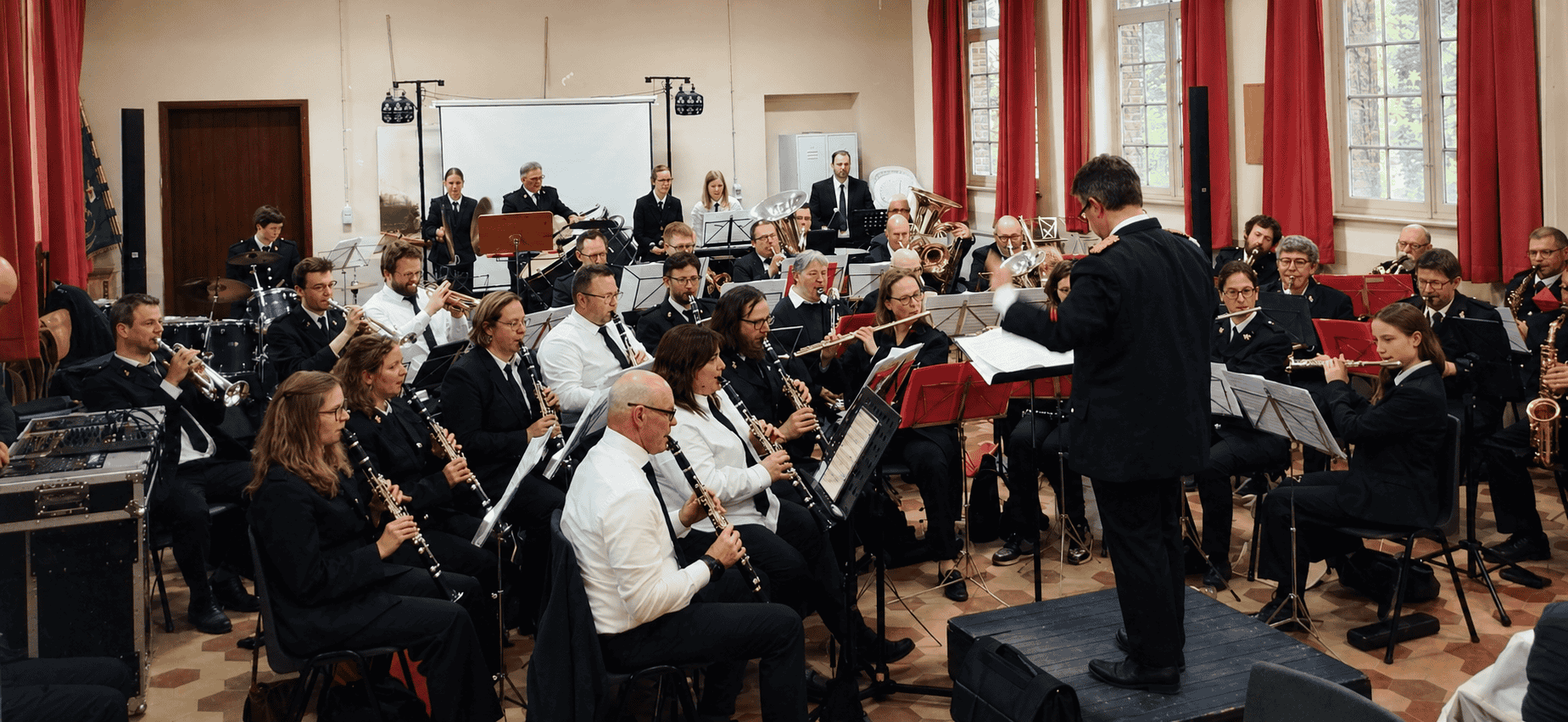
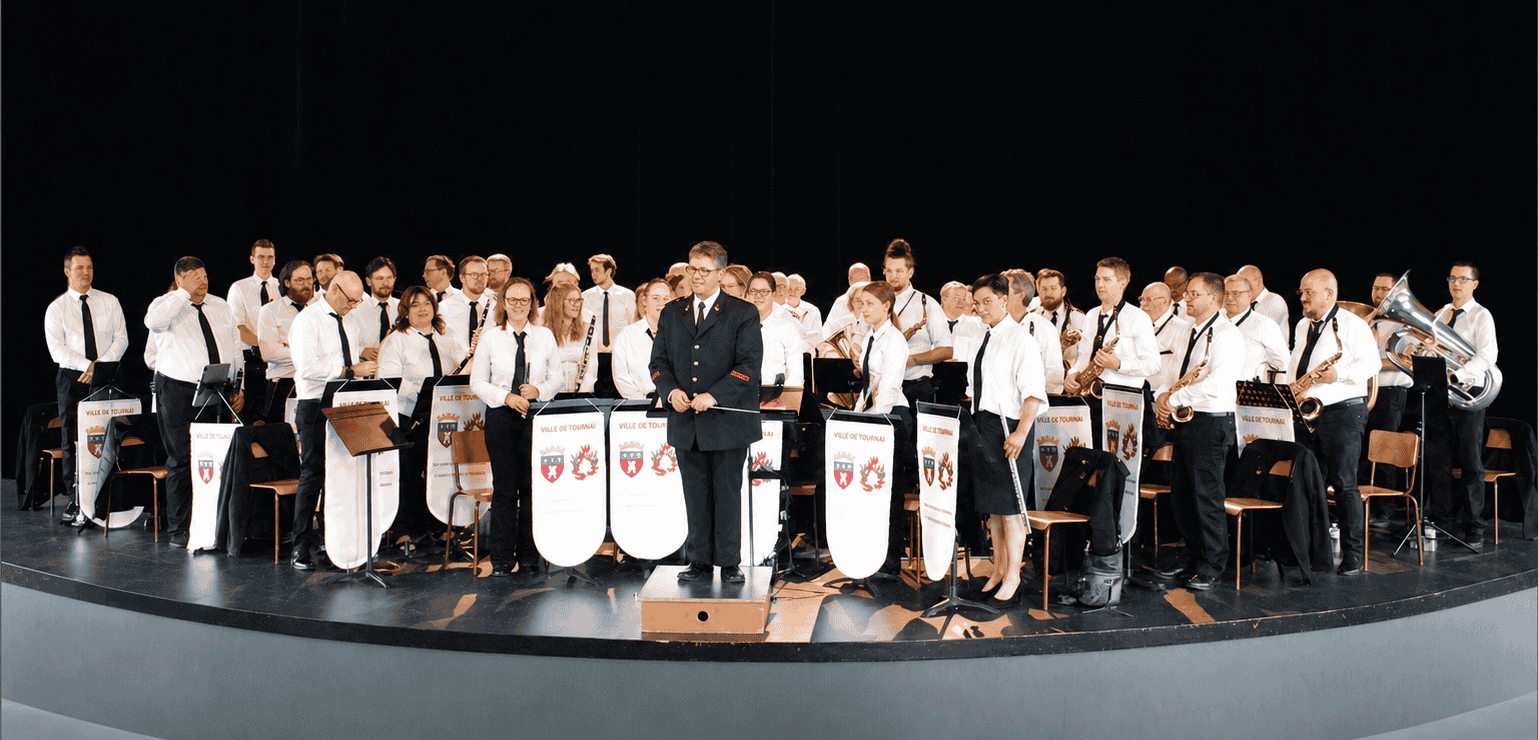
The Harmonie des Pompiers de Tournai is a Belgian association-run wind band founded in 1833. Nearly two centuries of existence, fifty-six musicians, around fifteen performances a year, a benchmark wind-band repertoire carried by the great names of the genre, such as Philip Sparke, Jan Van der Roost, André Waignein and Samuel Hazo, with the occasional foray into film or popular music. Its audience mixes families, regulars of the region's musical scene, and those who come to hear it because it carries part of the heritage of the city of Tournai.
The orchestra is going through a period of renewal. In October 2025, Benoît Chantry, conductor and composer, takes over as its director. A reshaped committee, the arrival of a new generation of musicians, the desire for a fresh start. It is in this context that Sostenutoo enters the scene.
Before: a familiar system,
to take back in hand
When Benoît takes over, the organisation runs on the tools of any association-run band with a few decades behind it. Communication goes by email, scores are printed and handed out at rehearsal, programmes are sent to the musicians by the secretary. Absences are reported however they can be: by text to the conductor, by email to the committee, or in person before rehearsal.
For the musicians who want their parts digitally, sending them before each concert can take up to half a day: each part has to go to the right person, for each section, which can amount to as many as fifteen separate sends. The librarian manages the physical archive, and an email shared between her and the conductor serves as the meeting point. The system is reliable in itself, but it lacks a common architecture.
Benoît, coming from another band where he had grown used to a well-oiled set-up, wants something else from the moment he arrives. He has already tried Google Forms, combined with various tools; above all he wants to avoid scattering tools around, and is looking for a centralised formula — namely a single tool for schedules, messaging, sheet music and programmes. Everything in one place. He just has to find it.
How the tool arrived
Benoît asks several people around him, chosen for their feel for digital tools. One of them replies that there is, in fact, a platform that does all of this, and that it is called Sostenutoo.
A musician told me: I asked the AI which tool could do all of this, and it recommended Sostenutoo.
A video call with the platform's founder, himself a conductor, confirms that the tool genuinely meets the needs of the job. The experiment can begin.
A fast roll-out
The switch takes place in January, at the annual general meeting. Benoît uses the season-opening address to announce the move to the platform and to set out the spirit of the project.
Within two weeks, the vast majority of musicians sign up. Within two months, almost everyone is on the platform.
On the content side, the set-up is faster than expected. Benoît uploads about ten pieces in the first few weeks, then adds each new work as it is put on the programme. For the scores, the automatic dispatch tool — which reads the visual content of a scanned PDF to identify the instrument and the part — does most of the work. Today, the entire repertoire worked on since October, and everything that will be played up to June, is available on the platform.
The automatic score-dispatch tool is genuinely very handy. Scan a score, and each musician finds their own part without anyone having to sort through it.
What changed,
concretely
The transformation can be measured in several places, sometimes where it was not expected.
Sheet music
The half-day of individual sends before each concert is gone. Each musician receives the parts for their instrument directly, with no manual intervention. For the librarian, scanning a new piece is enough; the tool handles the dispatch.
Concert programmes
For sharing programmes, the tool offers great flexibility. The programme is available at all times, and a decision made at the dress rehearsal (swapping two pieces, dropping one) is immediately visible to everyone.
Announcements
A last-minute update, a time that changes, an extra sectional added: all of it is communicated directly, and afterwards no one says they were not aware of it.
New musicians
Two new musicians have arrived since the app was adopted. The old logic — tracking down an address, passing on the history, checking the scores were received — is gone: they sign up themselves and find the organisation already in place.
Attendance
A large majority of musicians now report their absences from the platform, which lets the conductor prepare his rehearsals knowing in advance who will be there.
Before, I felt that once a programme had to be sent out, it had to be final. Now the programme is available, and if at the dress rehearsal, two days before, I decide to swap two pieces, it's still possible.
Benoît is clear-eyed about the road ahead: “It's a very useful tool. The habit is built up gradually, but it takes a little time for everyone to adopt it.”
The most unexpected effect:
the conductor's mental load
The deepest transformation is not the one that was expected, nor the one measured in hours. What keeps coming up when Benoît speaks is a single word: responsiveness.
I don't really see the benefit in terms of time saved. There is one, for sure. But above all in responsiveness.
Three half-days minimum
Call the committee, wait for the next meeting, then for an email to be sent to everyone, before the orchestra is informed of a request for a future concert.
As soon as it comes in
The request is added to the calendar on the spot; if the period is busy, an announcement goes out in parallel. Everyone knows immediately.
The same logic applies to the rest. What changed is not so much the cumulative time as the easing of a constant vigilance: checking that the information got through, that the scores have arrived, that the date is known. The tool does not remove these concerns. It takes them on.
What you take away
with Sostenutoo
“It's a reassuring tool. Everything I need the musicians to know, I know it's there. It clears away a large part of the mental load.”